How Long Does Botox Last?

How Long Does Botox Last?

Botox

On average, standard wrinkle reduction treatments deliver visible results that last between three and four months. While individual timelines vary with personal metabolism and muscle strength, the underlying purified protein gradually degrades over 12 to 16 weeks, allowing the targeted muscles to slowly regain their natural movement patterns.

The initial softening of dynamic lines typically begins within three to five days following your session. You can expect to see the peak, full structural impact of your treatment around the two-week mark. Because this process is non-permanent, maintaining your smooth, refreshed appearance requires a consistent schedule of maintenance appointments.

Key Factors That Influence Your Treatment Longevity

The exact rate at which your skin texture reverts to its pre-treatment state depends heavily on a range of metabolic and lifestyle factors. No two faces are identical, which means the breakdown process is inherently unique to your biology.

1. Individual Metabolic Rate and Activity Levels

Your body treats the injection exactly like any other naturally occurring protein compound. If you possess a highly active metabolism or engage in rigorous daily physical exercise, your system will likely break down and clear the neuromodulator at a faster pace.

2. Muscle Mass and Depth of Expression Lines

Larger, stronger muscle groups require more product to achieve optimal relaxation and tend to return to active movement sooner. For example, men frequently experience a slightly shorter treatment lifespan than women due to inherently greater facial muscle density.

3. Cumulative Treatment History

Consistency is your greatest asset for longevity. When you receive regular maintenance doses before the previous cycle has fully dissipated, the targeted muscles remain in a prolonged state of relaxation. Over time, this cumulative effect trains the muscles to contract less forcefully, which naturally widens the window between your touch-ups.

Botox

Longevity Expectations by Facial Zone

The specific location of your treatment plays a decisive role in its overall lifespan. Areas exposed to continuous, high-frequency expressions break down the product much faster than calmer zones.

Treatment Zone Primary Cosmetic Focus Typical Results Window
Forehead Lines Horizontal forehead furrows 3 to 4 Months
Frown Lines Vertical “11 lines” between eyebrows 3 to 5 Months
Crow’s Feet Fine expression crinkles around the outer eyes 3 to 4 Months
Masseters Jawline slimming and facial slimming 4 to 6 Months

Actionable Tips to Maximize Your Anti-Aging Investment

While you cannot alter your genetic metabolic speed, you can adopt specific preventative habits to safeguard your aesthetic investment.

  • Commit to the Critical 24 Hour Rules: Avoid rubbing, massaging, or applying heavy physical pressure to your face immediately after your session to prevent the product from shifting into unintended muscle zones.
  • Prioritize Comprehensive Sun Protection: Ultraviolet radiation accelerates fundamental skin aging and triggers cellular inflammation that can rapidly degrade your results. Apply broad-spectrum sunscreen daily.
  • Keep Skin Deeply Hydrated: Clean, medical-grade skincare paired with top-tier hydration plumps the surrounding dermis, creating a smoother canvas that visually enhances and prolongs the lifting effect.

Frequently Asked Questions

Why does the treatment seem to wear off faster in the summer?

Increased outdoor physical activity, elevated metabolic rates due to warmer weather, and higher levels of direct ultraviolet exposure can collectively accelerate the natural breakdown of the protein matrix.

Can intense exercise shorten the time to smooth skin results?

Yes, high-intensity athletes or individuals who participate in strenuous daily workouts often find their results fade closer to the three month mark because their rapid metabolic turnover processes the formula more quickly.

Will my face look worse if I choose to stop treatments?

Not at all. If you decide to pause your care, your muscle strength will simply return to its baseline, and your natural expression lines will gradually reappear exactly as they were before you began.

What is the ideal age to begin preventative injections?

Many individuals choose to begin in their mid-to-late twenties or early thirties, when initial fine lines start to linger at rest, helping prevent deeper wrinkles from etching permanently into the skin.

Maintaining Your Botox Results

Understanding how long does botox last empowers you to manage your aesthetic routine with complete confidence. By pairing timely touch-ups with professional skincare and daily sun protection, you can seamlessly extend that smooth, refreshed look year-round.

Ready to design a customized treatment schedule that perfectly aligns with your natural anatomy? Contact us at Quick Aesthetics Med Spa today to lock in your next consultation.

The Definitive Guide to Frontalis Muscle Botox and Forehead Rejuvenation

The Definitive Guide to Frontalis Muscle Botox and Forehead Rejuvenation

Muscle Botox

Smoothing out stubborn lines across the upper face requires a deep understanding of facial anatomy. At Quick Aesthetics Med Spa, we focus on safe, precise, and highly personalized injection strategies that preserve your natural expressions.

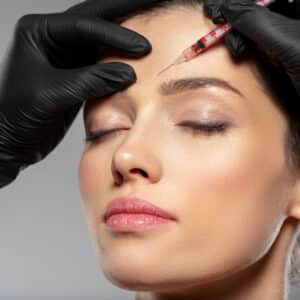
When addressing horizontal expression lines, your injector targets the large, dynamic frontalis muscle. Achieving a refreshed, youthful appearance depends entirely on managing this tissue with precision.

What is the Frontalis Muscle and Why Does it Wrinkle?

The frontalis is a wide, thin muscle covering the upper portion of the face. It originates near the top of the skull and extends down into the skin around your eyebrows.

Unlike most muscles that connect bone to bone, this specific tissue integrates directly into facial skin. This unique anatomy allows you to elevate your eyebrows, open your eyes wide, and express surprise or concern.

Every time you raise your eyebrows, the tissue contracts upward, bunching the skin above it. Over decades of repetitive movement, these temporary creases transform into permanent dynamic lines.

Environmental factors such as sun damage and the natural decline in skin elasticity cause these horizontal forehead wrinkles to remain visible even when your face is completely relaxed.

How Does Botox for the Frontalis Muscle Smooth Forehead Lines?

Frontalis Muscle Botox works by precisely introducing a purified neurotoxin to temporarily block chemical signals from nerves to the targeted tissue. By intercepting these neurotransmitters, the overactive fibers can no longer contract forcefully. This allows the overlying skin to relax completely, smoothing out deep creases and preventing new wrinkles from embedding into the dermis.

The Balancing Act: Managing Opposing Facial Muscles

A common mistake in aesthetic medicine is treating the upper forehead as an isolated zone. Your facial movements are governed by a continuous tug-of-war between elevator muscles that lift the face upward and depressor muscles that pull it downward.

The frontalis is the only elevator muscle in the upper face. It works in direct opposition to the glabellar complex, which includes the corrugator muscles and the procerus. These lower muscles pull your brows downward and inward when you frown.

Aesthetic Treatment Strategy

Target Muscle Group

Mechanical Direction

Primary Visual Outcome

Forehead Smoothing

Frontalis

Upward (Elevator)

Flattens horizontal lines; can lower brows if overtreated.

Frown Line Relaxation

Glabella / Corrugators

Downward (Depressor)

Eliminates vertical “11 lines”; lifts the inner brows.

Balanced Full-Face Botox

Combined Approach

Neutralized Tension

Creates a smooth, lifted appearance while preserving natural movement.

If an injector relaxes the frontalis without addressing the downward pull of the glabella, the depressor muscles will pull the brows down completely unhindered. This imbalance leads to a heavy forehead or a flattened brow shape.

To achieve a natural, bright-eyed look, an expert provider will almost always recommend treating both areas during a single appointment to achieve balanced Botox results.

Dosing Strategies and Preventing Common Complications

A successful treatment plan relies on conservative dosing and meticulous anatomical placement. The upper forehead requires a distributed, low-dose injection technique to soften lines while preserving some movement.

Preventing Brow Ptosis (Heavy Brow)

If injectable neurotoxins are placed too low on the forehead (within 1 to 2 centimeters of the orbital bone), the lower fibers of the frontalis lose their ability to raise the eyebrows. This causes brow ptosis, a temporary complication in which the eyebrows feel heavy and the skin over the eyelids droops.

Expert injectors avoid this by keeping treatments concentrated within the safer upper half of the muscle tissue.

Avoiding the Mephisto Effect (Spock Brow)

The Mephisto effect happens when the central portion of the frontalis is successfully relaxed, but the outermost lateral fibers remain fully active. When you try to lift your face, the outer edges of your eyebrows pull up sharply, creating an unnaturally arched appearance.

This issue is easily resolved by placing a tiny fraction of a unit of neurotoxin into the active outer muscle fibers to balance the brow line.

What to Expect During and After Treatment

The actual injection process is incredibly efficient and takes less than fifteen minutes to complete. Using an ultra-fine, medical-grade needle, your provider places tiny amounts of neurotoxin into specific points across the upper face. Most patients describe the sensation as a minor, temporary pinch.

There is zero structural downtime associated with this procedure. You can return to your professional routine immediately after leaving the clinic.

To protect your results, avoid rubbing the treated area, lying completely flat, or participating in vigorous exercise for at least four hours post-treatment. This prevents the medication from migrating into unintended muscle groups.

Frequently Asked Questions

How many units of Botox are normally used for the frontalis muscle?

The dosage varies depending on your muscle mass, the depth of your creases, and your movement goals. Most women require between 10 to 20 units in this area, while men often need higher doses due to stronger muscle fibers. This dose is typically distributed across 4 to 6 precise injection points.

How long do the smoothing results last?

Most patients enjoy visible smoothing for 3 to 4 months. The longevity of your treatment depends on your personal metabolic rate, your daily expression habits, and how consistently you receive maintenance injections.

Will forehead injections make my face look completely frozen?

When administered by a highly trained provider, your face will not look frozen. Modern injection techniques focus on softening deep lines while preserving enough natural muscle movement to allow you to express genuine emotions.

Can treating the frontalis lift my eyebrows?

Injecting the frontalis alone can actually reduce its lifting power, which may slightly lower the brows. To achieve an intentional brow lift, your provider will target the depressor muscles around the outer eyes and glabella, allowing the frontalis to lift the brow area without resistance.

At what age should I start treating forehead lines?

There is no single correct age to begin neurotoxin treatments. Some individuals start preventive treatments in their mid-20s, when dynamic lines begin to linger, while others seek corrective care in their 30s or 40s to soften deeper, more established creases.

Schedule Your Forehead Rejuvenation Consultation

Investing in aesthetic treatments requires partnering with providers who deeply understand facial anatomy. Our team focuses on safe dosing, artistic placement, and natural-looking outcomes tailored to your lifestyle.

If you want to smooth out persistent expression lines while maintaining a rested appearance, we are ready to build your customized treatment plan. Contact us at Quick Aesthetics Med Spa today to book your one-on-one consultation.